
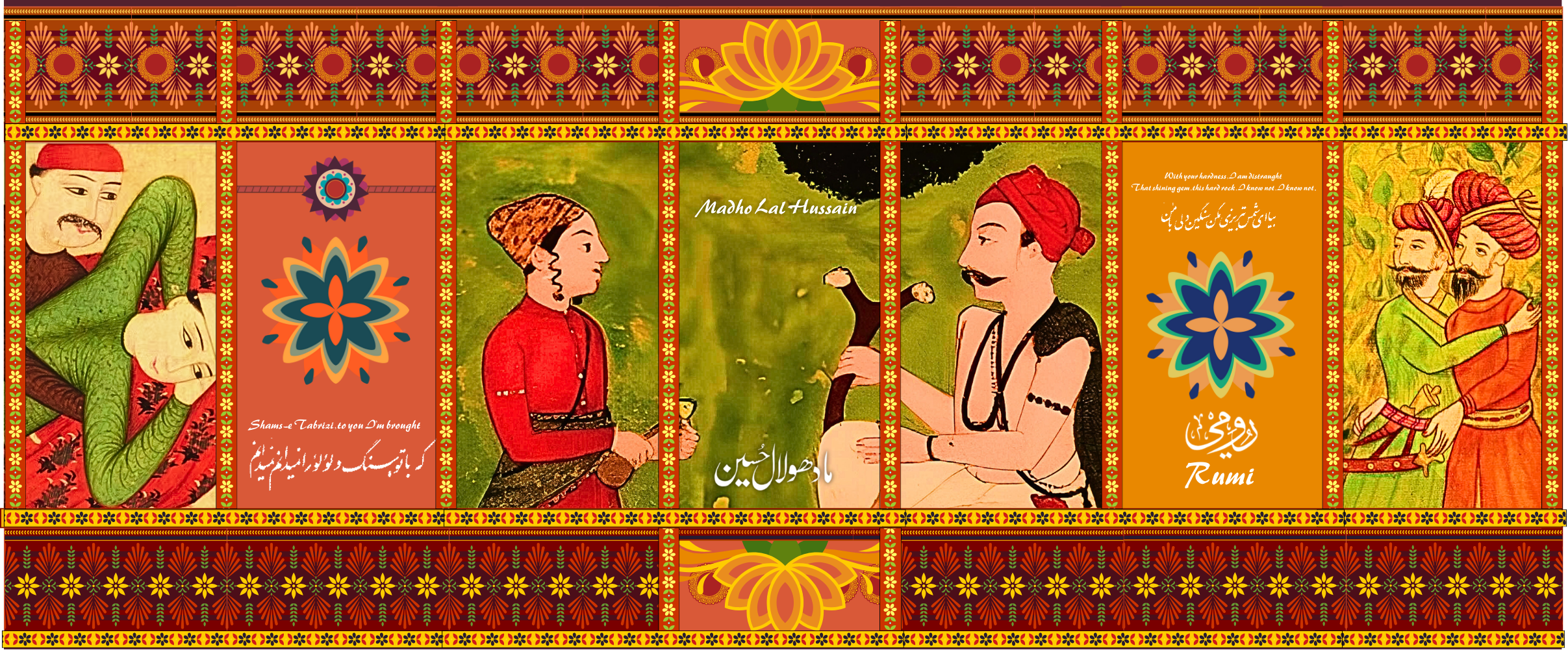
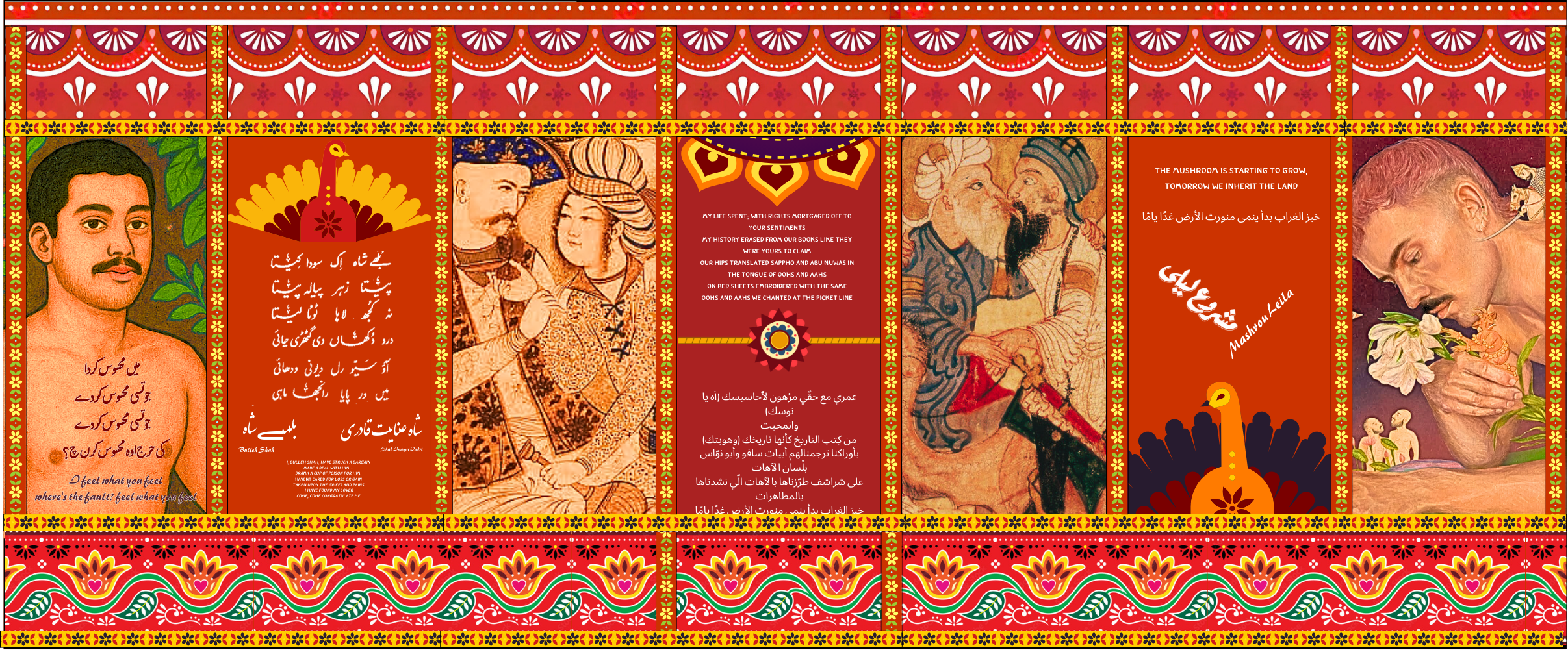
“Our Lives Spent” is a remix of queer artifacts in the style of Pakistani truck art. This unique form of painting is often used to decorate large trucks, buses, and even rickshaws, as an expression of the drivers’ identity. However, my design subverts the expected themes and religious motifs that are prevalent in Pakistani-Punjabi truck art, involving quotations and portraits of famous Muslim saints and poets. Instead, Our Lives Spent displays suppressed artifacts of queer Muslim history as well as contemporary works that rebel against this erasure. These artifacts originate from various centuries, spanning the cultures of the Islamic world while confronting Pakistan’s tyrannical laws – a death penalty for homosexuality and blasphemy- and widespread hatred towards LGBTQ+ identities that roots its justification in religion.
There are multiple components stitching the canvas of Our Lives Spent. First, I authentically adapted truck art’s floral patterns, color themes, and grid-based layout. In doing so, I carry the embedded artifacts into the lens of a population accustomed to this art form, invasively so. Next, I remember the stories of same-sex relationships amongst Muslim poets and saints, like Madho Lal Hussain, Rumi, and Bulleh Shah, through their own poetry. Stories that would never be discussed publicly let alone painted on trucks. I also quoted lyrics from the Lebanese band Mashrou Leila who were banned for singing about socioreligious norms that stifle LGBTQ voices. Although founded, and somewhat intended, for the Middle-East, their sorrow and revolt undoubtedly targets the sociocultural norms of Pakistan as well. To illuminate this comparison further, I selected lyrics that challenge the oppressive structures common to modern Islamic societies, as well as reflecting the remix’s overall argument, and translated them into Punjabi.
Pakistan speaks various languages that can be roughly mapped to its provinces. I grew up in Punjab, inside Pakistani-Punjabi manifestations of the same psychological fences that Mahshrou Leila sought to tear. This is why I chose Punjabi and spotlighted the province. Despite this choice, however, Our Lives Spent is my tribute to anyone around the globe who recognizes the ache of living behind such fences.
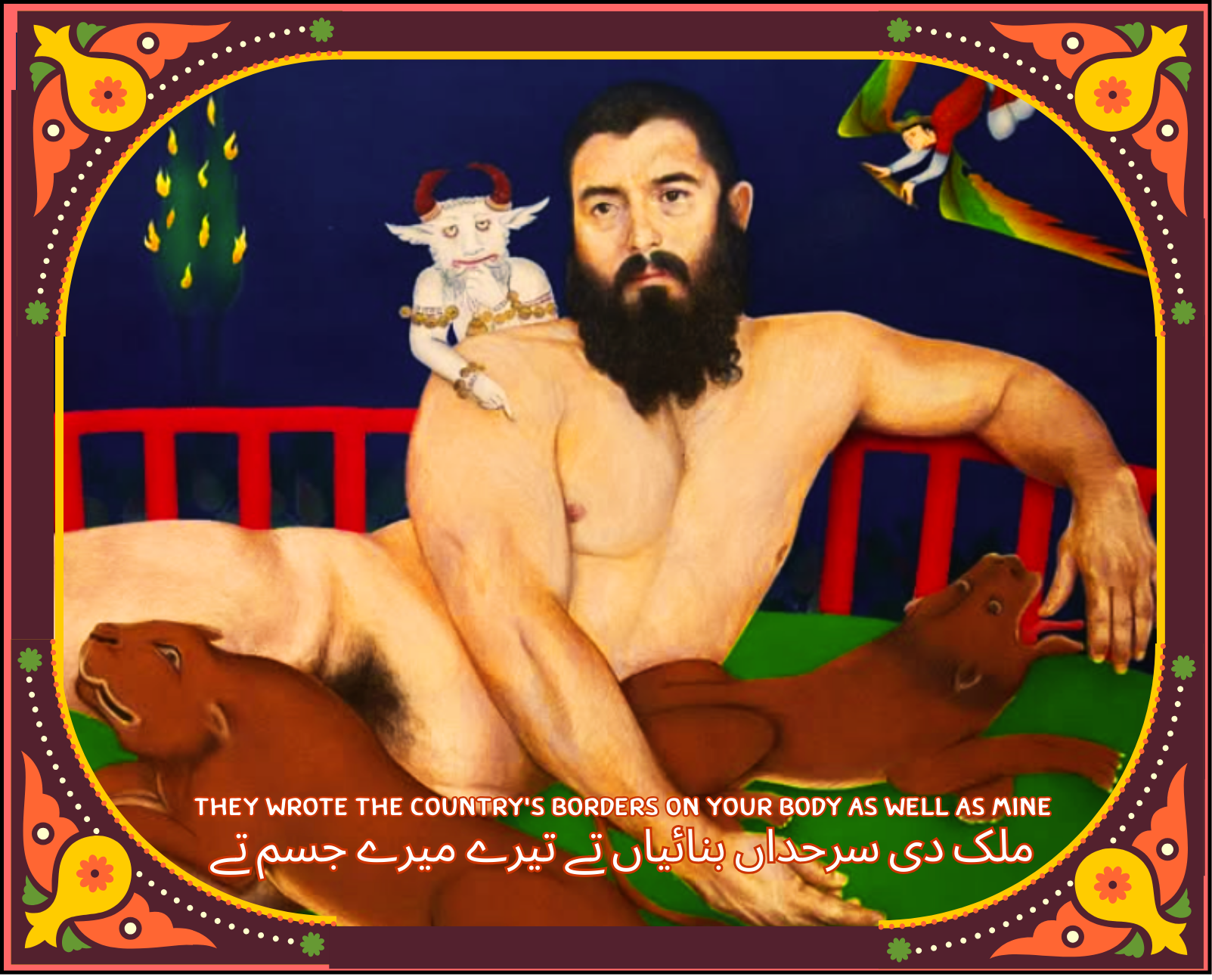
Lastly, I incorporated paintings by the Iranian artist Alireza Shojaian. His work depicts male beauty and homosexual desire in conjunction with Islamic artifacts, both as critique and unifying representation. My remix comprises only two media of sources: text and images. This is not only a choice to authentically adapt the truck art form, which similarly uses only text and images, but also a message that a handful of verses and paintings is enough to destabilize the entire narrative that justifies our lives spent in cages.
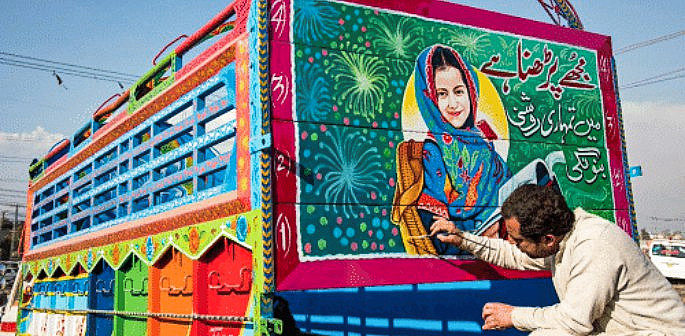
Style Inspiration (Pakistani Truck Art)
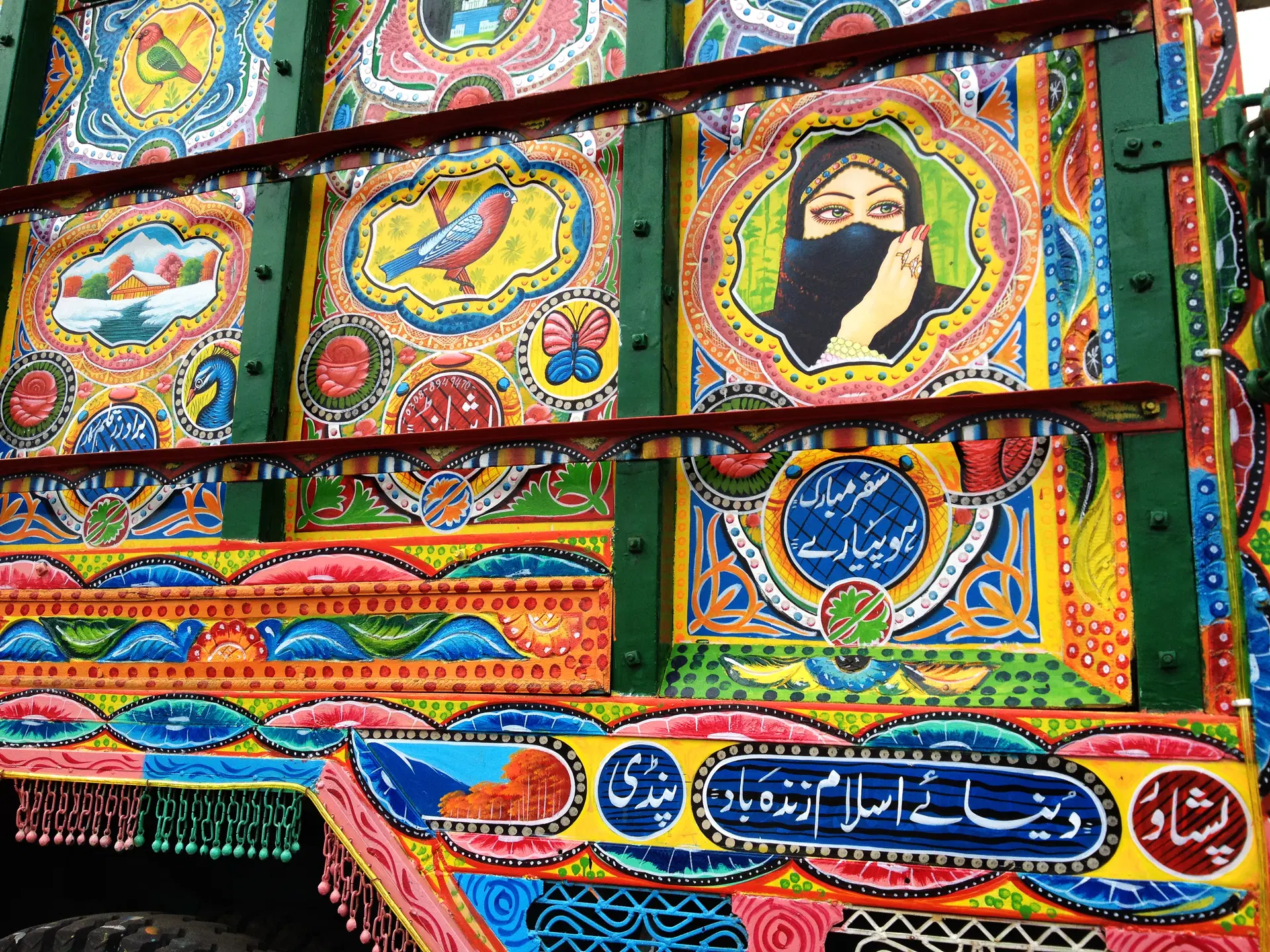
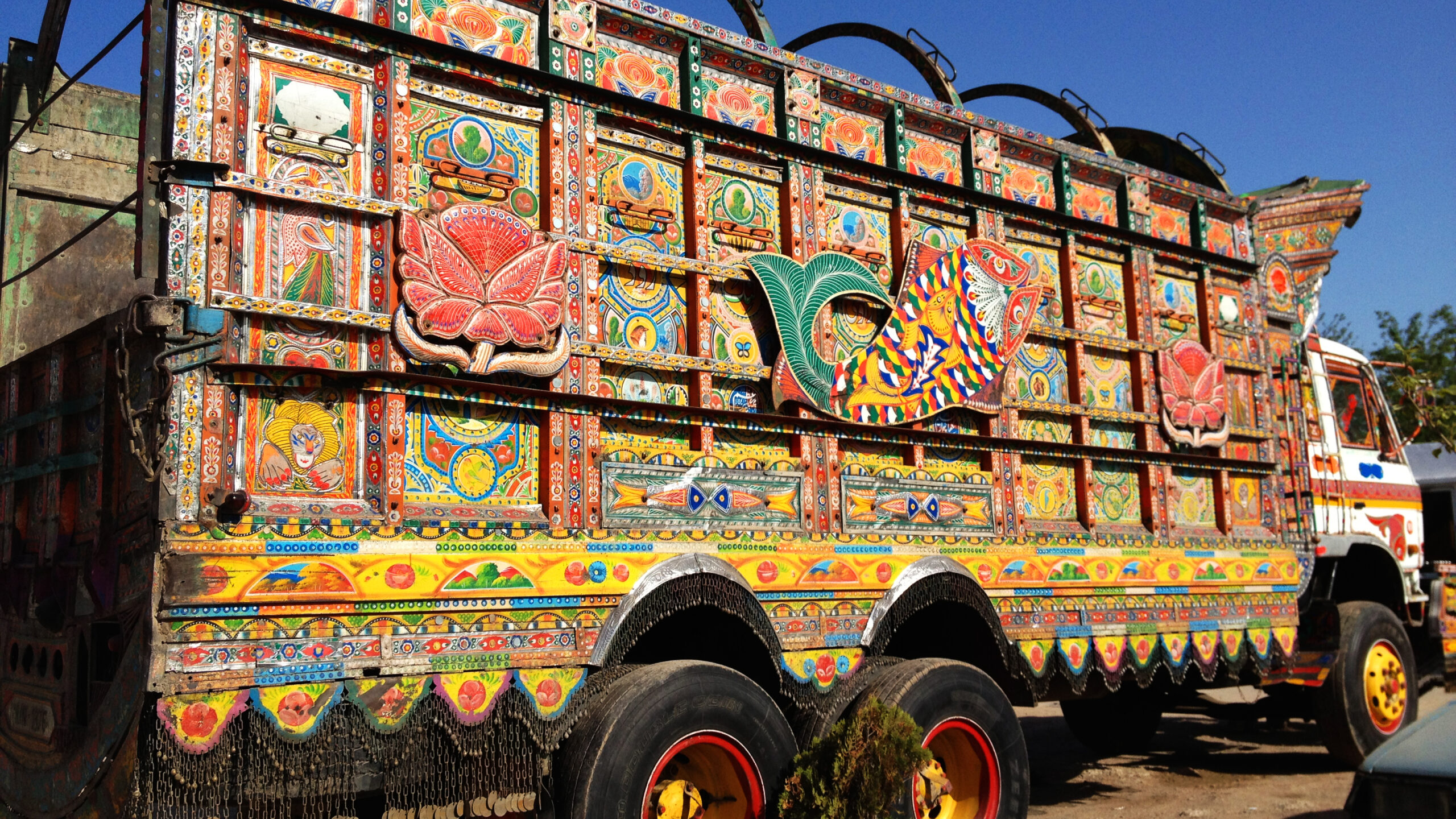
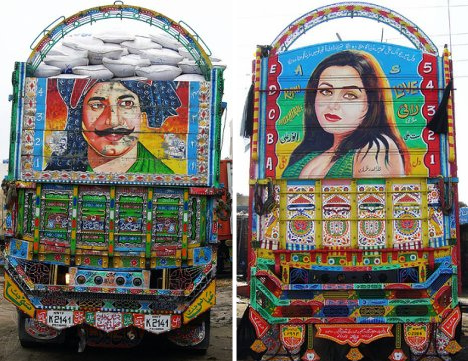
Process (Canva)


Display (SketchUp 3D)


This work is a non-commercial, class project by Awais Rohan Abid for DIG 401: Hacking, Remixing, and Design, at Davidson College (Spring 2025). All excerpts of song lyrics, poetry, vector graphics, and paintings in this remix are used under the doctrine of Fair Use (17 U.S.C. § 107) for purposes of criticism, comment, scholarship, and educational remix as part of the course assignment.
The following tools & software were used for all work:
- Canva (www.canva.com)
- SketchUp 3D (www.sketchup.com)
- DALL·E via ChatGPT – OpenAI GPT-4o (Generated truck-art reinterpretations of Alireza Shojaian’s painting; prompt documented below in Sources).
This work is authorized under the Library of Congress’s exemptions to the Digital Millennium Copyright Act (Section 1201), as announced July 26, 2010, for nonprofit educational purposes.
Information about the course and assignment can be found at https://courses.digitaldavidson.net/dig401/ and https://courses.digitaldavidson.net/dig401/hack-4-remix/.
This work is licensed under a Creative Commons Attribution-NonCommercial-ShareAlike 4.0 International License. This remix is released freely under this license and is not intended to substitute for or compete with any original work.
© Awais Rohan Abid 2025. Licensed under CC BY-NC-SA 4.0
https://creativecommons.org/licenses/by-nc-sa/4.0/
Sources
Mashrou’ Leila, Ibn El Leil (album), 2015. Selected lyrics and translations from the following songs (All Punjabi translations done by Awais Rohan Abid):
- “Kalaam (كلام)”: ”Feel what you feel”, “They wrote the country’s borders on your body as well as mine”. English translation: https://lyricstranslate.com/en/kalaam-kalaam.html-0#songtranslation
- “Tayf (Ghost) (طيف)”: “My life spent with rights mortgaged off to your sentiments”. English translation: https://genius.com/Mashrou-leila-tayf-ghost-lyrics
Bulleh Shah (17th c.), selected poems. Translated by Shivpreet Singh, from the blog post “Aao Saiyo Ral Deyo Ni Vadhaai” (Oct 2016). https://www.shivpreetsingh.com/2016/10/aao-saiyo-ral-deyo-ni-vadhaai.html
Jalāl ad-Dīn Rūmī & Shams Tabrīz, selected verses. Accessed via RumionFire: https://www.rumionfire.com/shams/rumi117.htm
Art Lab Artist (redkoala), vector illustrations (truck art motifs, decorative panels, floral patterns). Source: ABPosters image library. https://www.abposters.com/search/?q=203212266
Canva Image Library, Truck art vectors
Madho Lal painting, in Sikh Heritage: Ethos and Relics (Bhayee Sikandar Singh & Roopinder Singh, 2012), p. 10. Public-domain image via Wikimedia user ThethPunjabi: https://commons.wikimedia.org/wiki/File:Miniature_painting_of_Sufi_saint,_Madho_Lal_Hussain.jpg
Muhammad Qasim, “Shah Abbas and a Page,” oil on paper, 1627. Collection: Louvre, Paris. Accessed via https://www.queerarthistory.com/love-between-men/muhammad-qasim-shah-abbas-i-with-a-page/.
Abdullah Bukhari (attrib.), two erotic miniatures (Lot 55), Sotheby’s (Istanbul), 1156 AH / 1743 AD. Accessed via: https://www.artnet.com/artists/abdullah-bukhari/two-erotic-scenes-ascribed-to-abdullah-bukhari-ari92Ky45R4ZxfzYeYtsgw2.
Alireza Shojaian, contemporary paintings:
- “Le Démon Blanc et l’Arbre en Feu (Valentin)” (2024, acrylic & color pencil, 80×60 cm)
- “Le Démon Blanc et l’Arbre en Feu (Arthur)” (2024, acrylic & color pencil, 120×160 cm)
- Sous le ciel de Shiraz (Alexander) (painting), 80 × 60 cm
- “HAMED SINNO ET UN DE SES FRÈRES” (acrylic & color pencil on wood, 150×220 cm)
- Reinterpretation (March 15, 2025): DALL·E via ChatGPT (OpenAI GPT-4o), prompt: “Render Alireza Shojaian’s HAMED SINNO ET UN DE SES FRÈRES in the style of Pakistani truck-art.”
Other Materials (For religious and cultural context. Not used in the remix artwork)
Epoch Magazine – Article on the presence and suppression of queer aesthetics in Islamic art.
MDPI Journal – Religions (Vol. 13, Issue 8, 702): Academic article discussing queer Islamic art and identity.
Sadam B., Pakistani truck (SketchUp 3D model), 2020. Trimble Inc. 3D Warehouse. https://app.sketchup.com/app?3dwid=9c07b61c-9978-476f-be3e-73cbf4a6738c
Blog post on Neonfrequencies (2017)


Leave a Reply