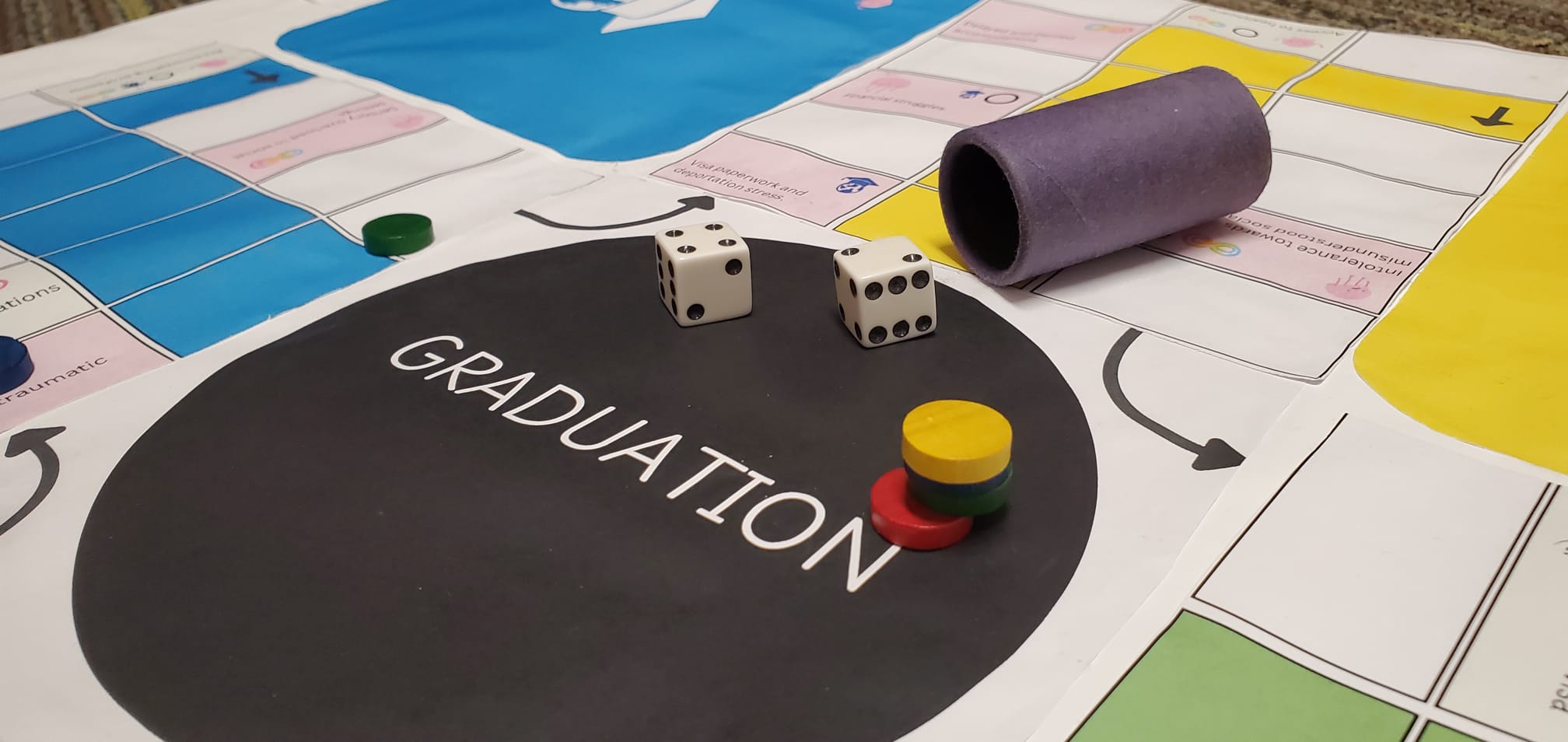
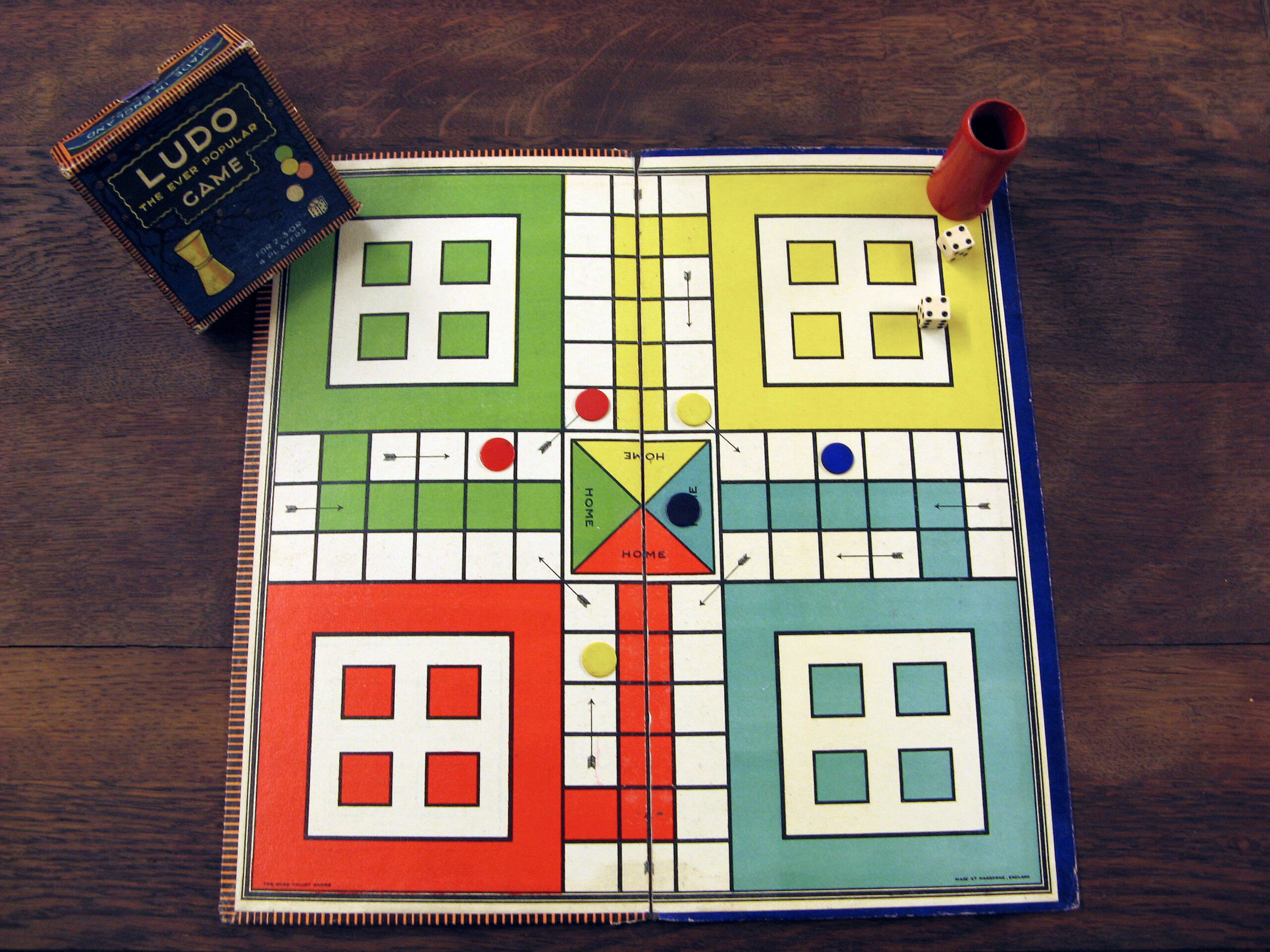
Ludo is a popular board game in South Asia and regions across the globe, originating from the Ancient Indian game Pachisi. In my hack, I reskinned the board to create Summa Cum Ludo, rewriting the narratives around the pieces to reflect a journey through college, and how it differs significantly for minority demographics like international or neurodivergent students.
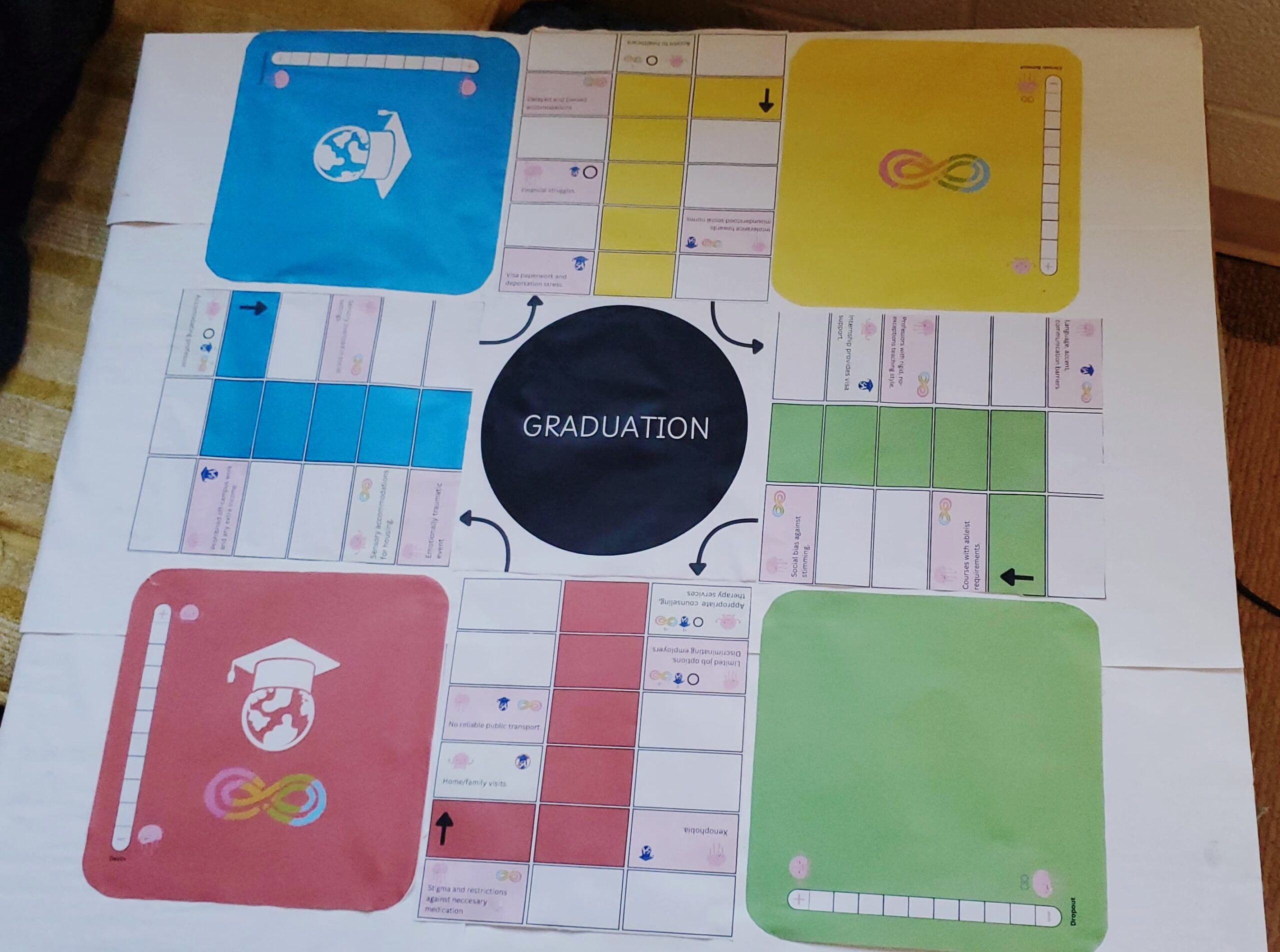
In the original Ludo, 2-4 players, each represented by a different color, move their pieces along squares that set up a route around the board, aiming to be the first to finish their cycle and reach “home” in order to win. The movement of the pieces in each turn is determined solely by the roll of a die. In Summa Cum Ludo, the 4 players are college students, each headed towards graduation instead of a “home,” and the route of the pieces reflects their journey through four years of college. However, the pieces are distinguished not only by a color, but also by the demographic they belong to within the college student population. I chose a 2×2 player design to represent four possible demographics: American-Neurotypical, American-Neurodivergent, International-Neurotypical, and International-Neurodivergent, utilizing the affordance of Ludo’s red-green-blue-yellow player aesthetic.
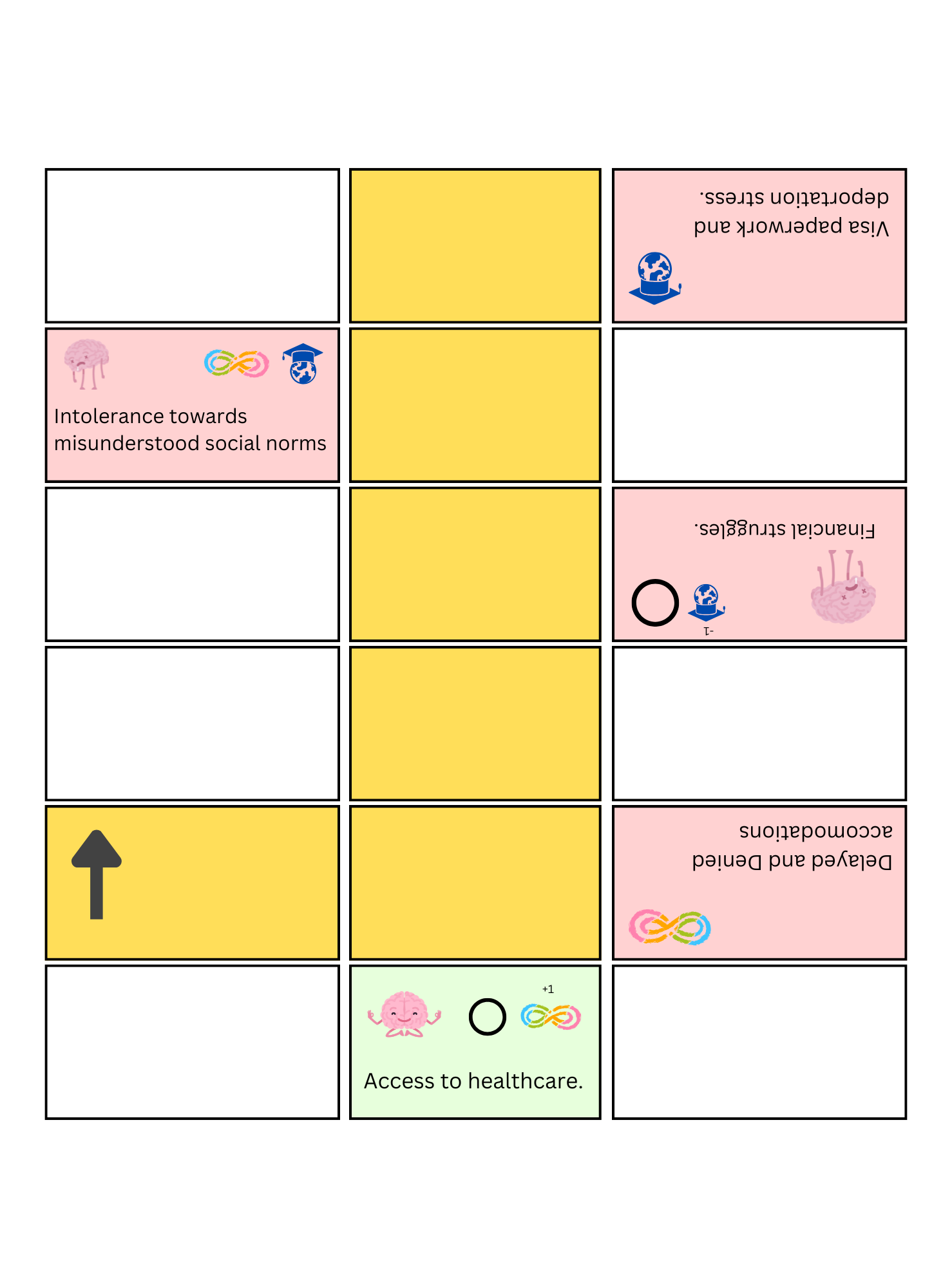
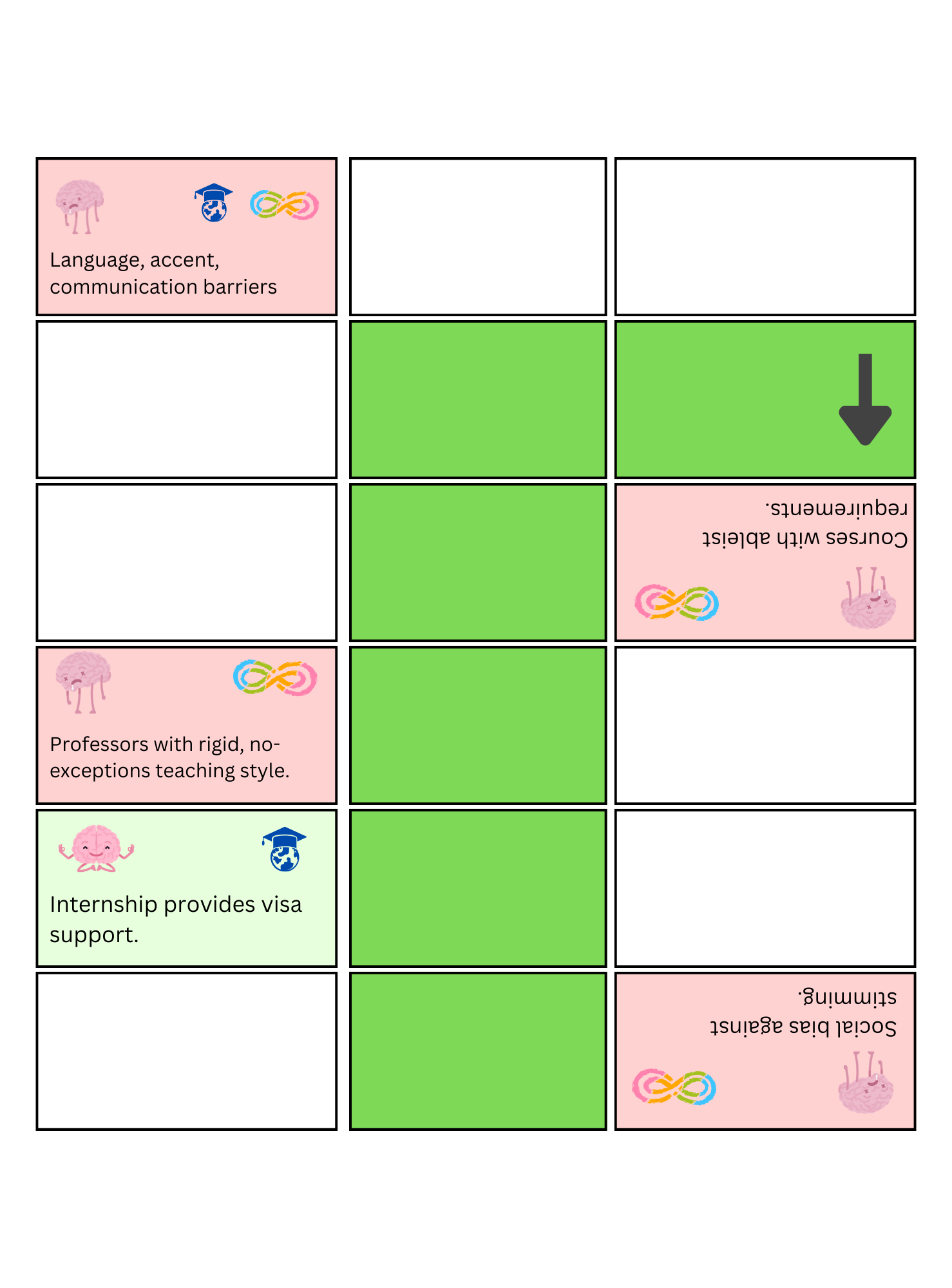
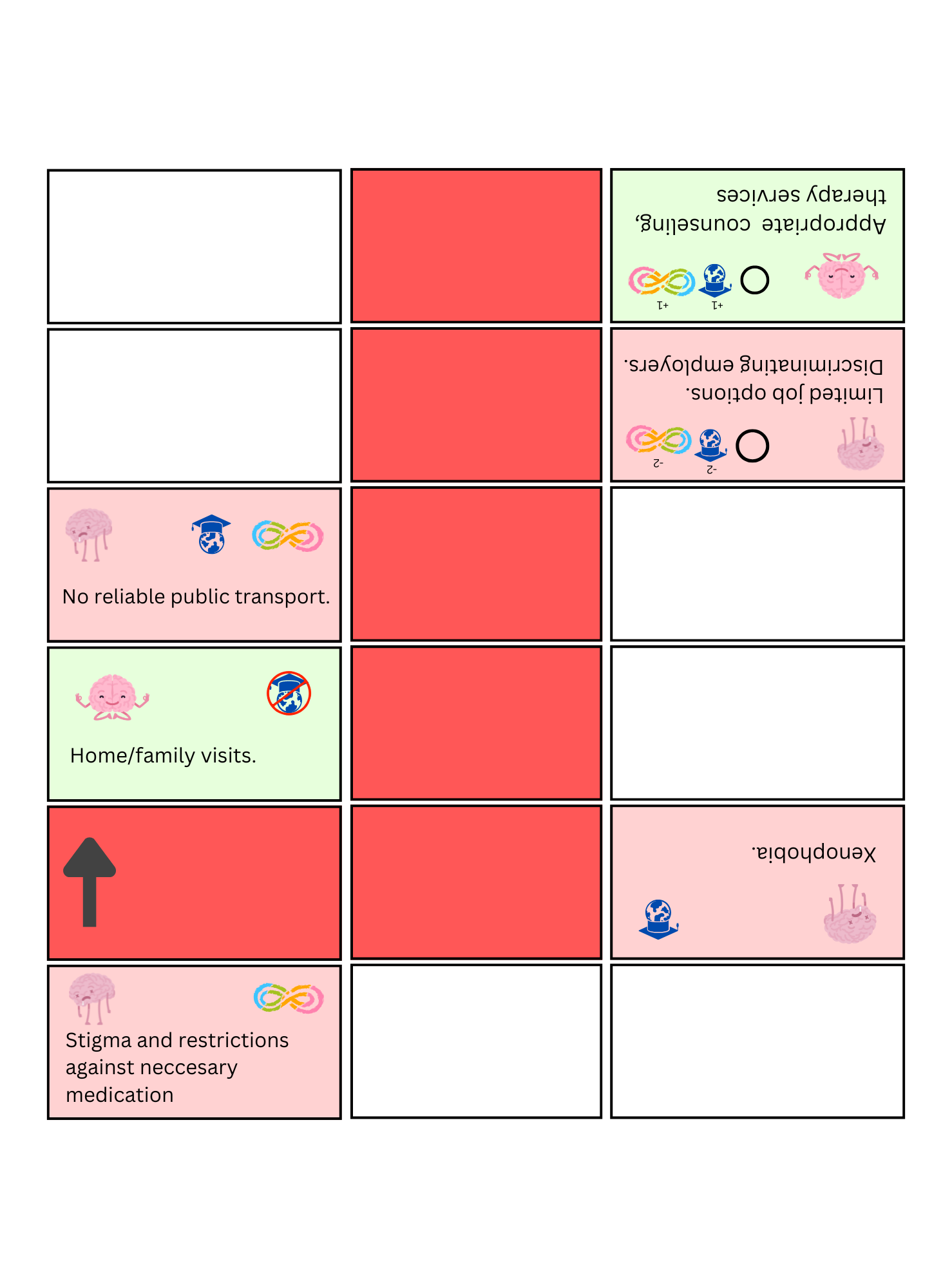
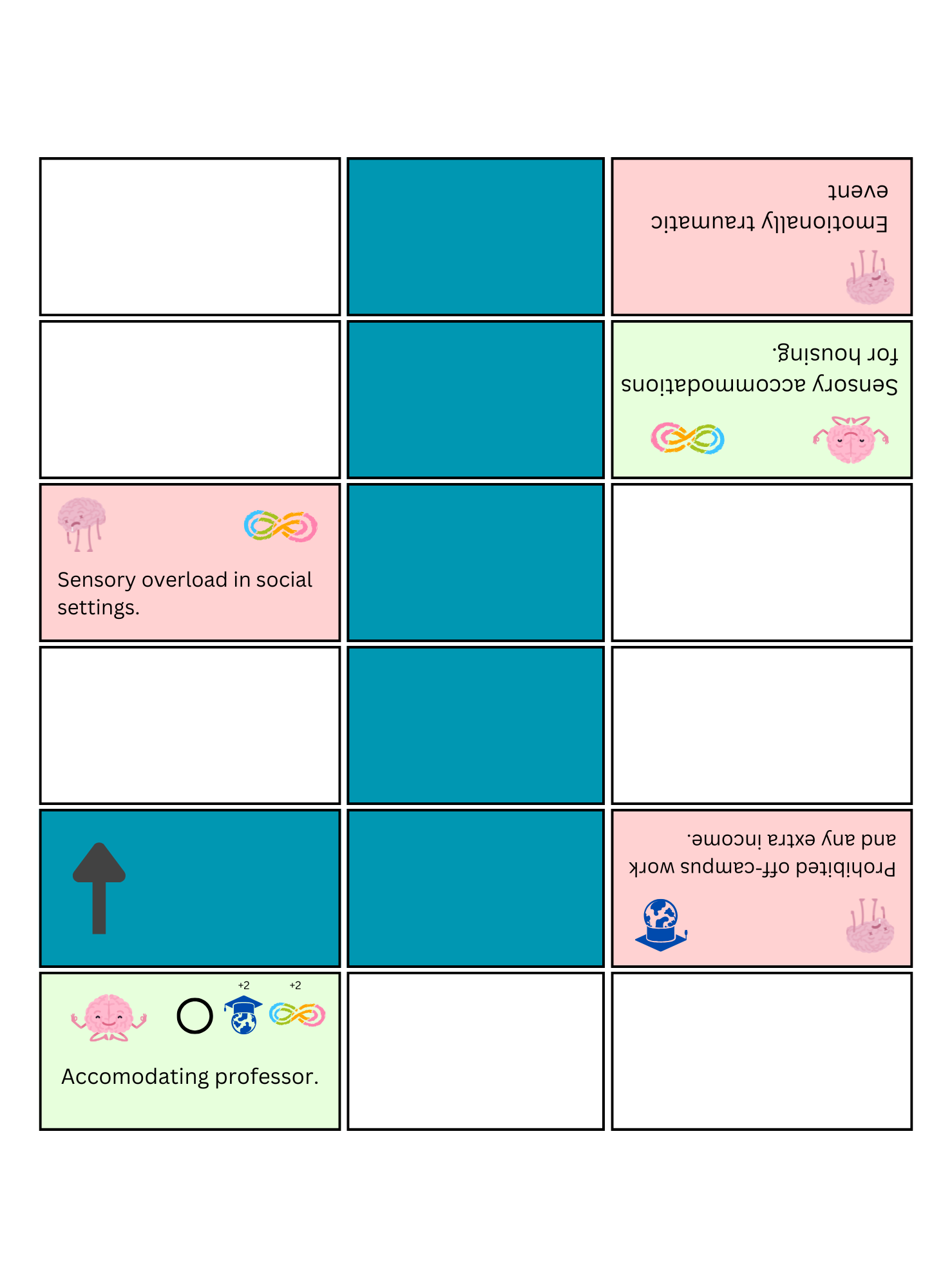
By distinguishing pieces in this way, Summa Cum Ludo enables a jarring shift in play. Dice are no longer the only alea element; where you were born and who you were born as are facts determined by chance long before the game started, but are now part of the play by directly influencing the trajectory and outcomes of the game. Such a shift allows us to meaningfully revisualize real-world structures, such as college, where each player appears to have a similar destination (graduation) and a similar path (taking courses, building a resume, applying for jobs, etc.) but is not actually in the same boat as other students. Not all squares in Summa Cum Ludo are blank, neutral steps. They are inscribed either with a cost or a benefit, which may affect only one, some, or all of the students depending on the demographic they’re in. The costs represent exhausting obstacles or disadvantages that influence students’ path towards graduation, such as financial struggles or emotionally traumatic events, and benefits represent events or experiences that support their journey, such as accommodating professors, therapy, etc.
Under Roger Caillois’ frameworks of play, classic Ludo is a combination of alea, agon and ludus. The dice are the main determinants of outcome, and the game is played primarily for fun. Summa Cum Ludo, however, transitions into the realm of mimicry in multiple ways. First, to have your pieces belong to a particular demographic of college students as you move on the board invites the players’ imagination into the same role. Since the squares directly reference player demographics when imposing cost or benefit, the player must come to see themself as part of that demographic in order to successfully navigate the board. In addition, the player must be conscious of the roles of other pieces, their demographics, their privileges.
In Ludo, the agon attitude is spurred by the rule that a player can “kill” another player’s progress by landing on the same square as them, forcing them to restart the piece’s journey. Players derive their enjoyment from hurting each other’s progress, even though the ability to do so is primarily determined by the die rolls. In Summa Cum Ludo, there is no such rule. If a student lands on the same square as another, the only harm done to either comes from the square itself, and whether their demographic is vulnerable to that obstacle. The players’ energy counter (i.e. a health bar) is what keeps track of such harm during the game, and once the energy runs out, the student cannot continue anymore. This choice more closely reflects the dynamics of students in college, without removing the possibility of harm in the gameplay. Such a form of mimicry also sparks what Miguel Sicart calls cognitive friction. If students are moving towards graduation, overcoming not the collisions with each other but rather the obstacles determined by life, then what is the meaning of reaching graduation first? Is play thrilling when you beat other students who were faced with greater disadvantages? Should the winner be proud because they reached the destination first, or because they reached the destination at all, in which case each student who reaches graduation has won. Are those who got burned out and never reached graduation considered losers? One extra rule turns this ethical dilemma into a wicked problem: if a player lands on another’s piece, they can choose to offer them energy by lowering their own. In doing so, a student may counter the unfairness of the system. Will any player help another, and if so, which demographic, and which not? Will they make decisions based on energy, identity, progress, or something else? Will they hold grudges for not being helped by another?
Mimicry, in this case, has forced agon and alea into a confrontation, igniting the ethical consciousness of players and tempting them to use moral thinking to solve an undefined ethical problem, which is exactly what constitutes a wicked problem. Under this wickedness, Summa Cum Ludo becomes a form of ethical gameplay. As Sicart puts it, ethical gameplay is “the experience of a game by players who make choices that are based on morality considerations that are derived from their understanding of the game system.” Summa Cum Ludo offers exactly this experience. It shifts the player’s attention away from other players and towards the board itself, breaking the perceived neutrality of the original gameplay, where the board favored noone. The route is no longer uniform, even though it is composed of the same number of squares for each player. Instead, the board has four layers overlapped onto one route. If you are an American-Neurotypical student, the number of squares that exhaust your energy are far fewer than an International-Neurodivergent student’s, and your path to graduation is by all measures a different path entirely, and the destination (graduation) holds a different meaning for you, yet the bird’s eye view of the journey only sees 4 equal players on a single board. The players must question the meaning of the path, the structure of the system, and why they are competing at all.
Ultimately, the bird’s eye view of Ludo is that of administrators, faculty, policy makers who decide what education is, how it should be implemented, standardized, and regulated, and it sees little of the layered complexity of student journeys. Colleges and all systems that rely on college metrics like GPA, graduation timelines, etc., disregard the differences in effort required to reach graduation. The concept of “fairness to other students” is often cited as a justification for standard policies around courseload, class structure, deadlines, etc., as if each student is moving to the rhythm of the same dice rolling in present-time. The reality is more like Summa Cum Ludo. The rolls of dice that happened at birth (will you be neurodivergent, will you need to leave your country to seek better higher education?, etc.) influence the outcome far more than single events along the way, and make graduation a non-generalizable, unique event for each student, that cannot be compared across groups of students to make judgments about individual ability, worth, and character. Summa Cum Ludo’s ethical gameplay directly questions the assumed fairness of such structures.
Design – using Canva


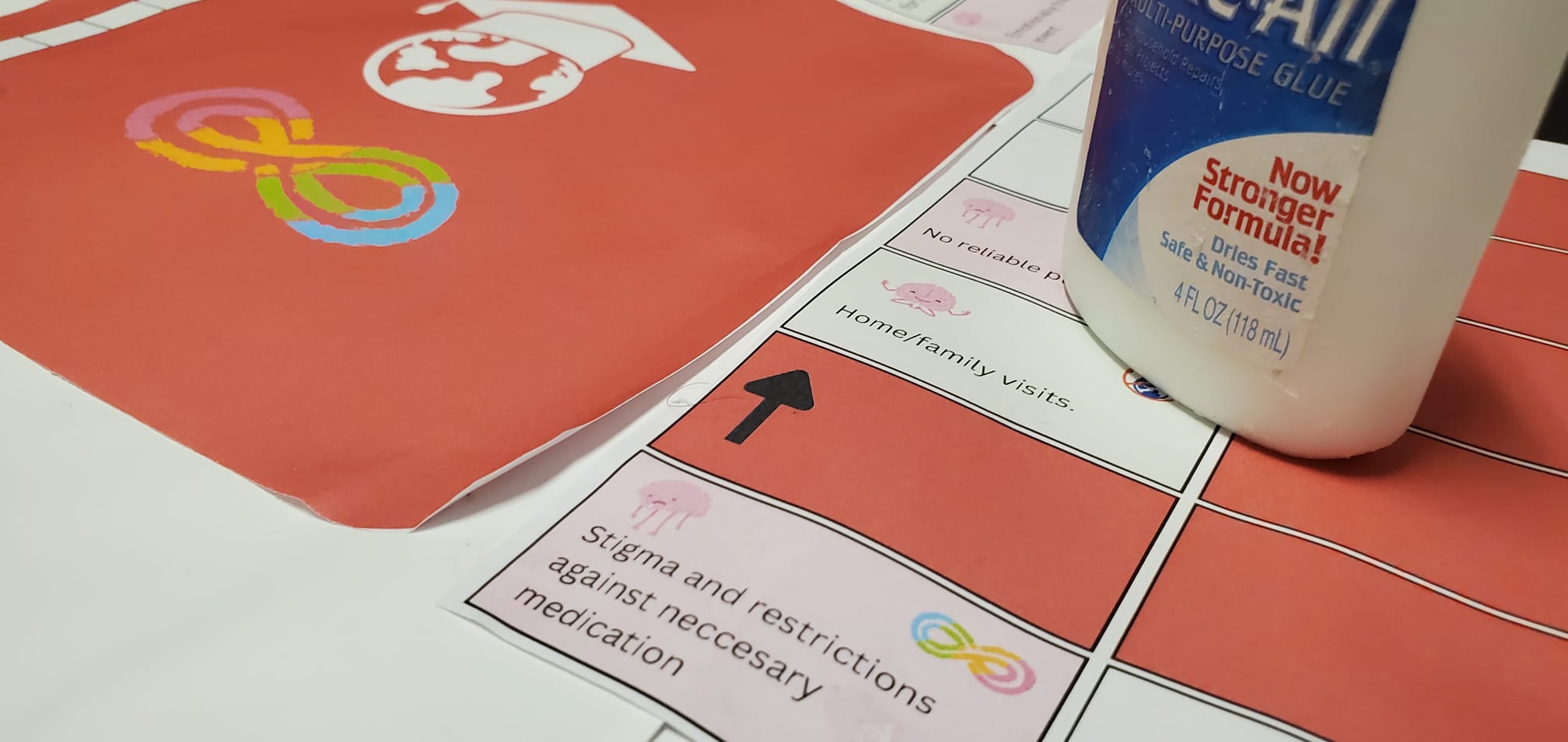
Construction






Leave a Reply